Clarity
How Visuals Make Complex Concepts Easier to Understand
How Visuals Make Complex Concepts Easier to Understand
How Visuals Make Complex Concepts Easier to Understand
The right visual does more than make a lesson attractive. It exposes relationships, sequence, change, and scale that would otherwise remain hidden inside the explanation.

Some ideas are difficult to understand because they cannot be observed directly. A learner may need to imagine a biological process, a data flow, a decision path, or the relationship between several parts of a system.
Words can describe these ideas, but words alone often ask the learner to build the picture mentally. A purposeful visual puts that picture on the screen where it can be examined, explained, and remembered.
The value of visuals is not that they make content look more polished. Their real value is that they can make the structure of an idea visible.
Visuals Reveal Relationships
Complexity often comes from relationships rather than individual facts. Learners may understand each component separately but not how the components affect one another.
A diagram can show:
• Which elements belong together.
• What connects to what.
• Which direction information or action travels.
• Where a decision changes the path.
• Which element is currently being discussed.
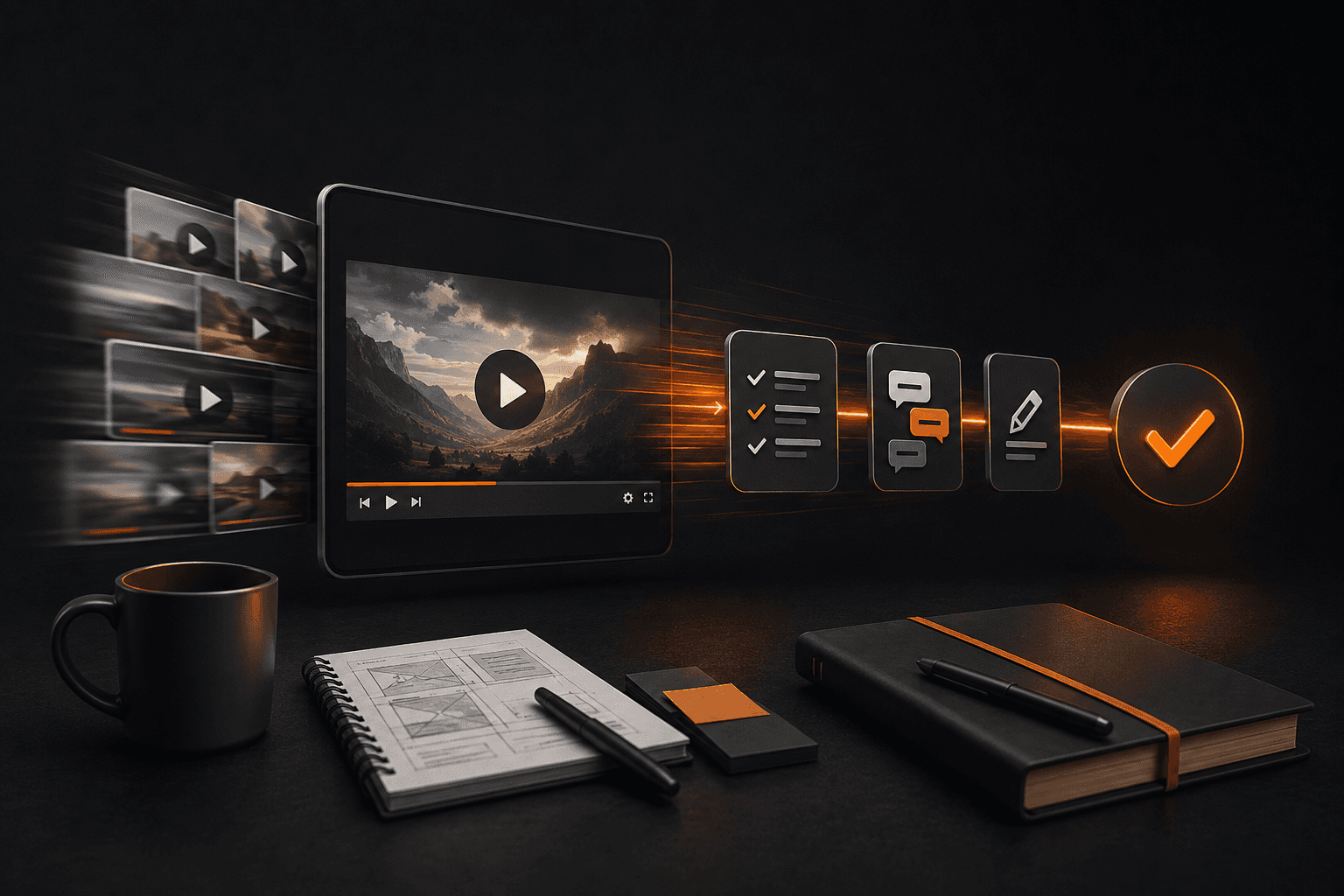
Consider a narration that describes how a learner's activity moves from an EdTech platform into an analytics dashboard and then triggers an intervention. Without a visual, the audience must remember each system and connection. A simple flow diagram allows them to see the entire process while attention is directed to one step at a time.
Visuals Make Sequence and Change Concrete
Processes unfold over time. Static explanations can make them feel like disconnected facts.
Animation is useful when the learning objective depends on seeing:
• An action followed by a reaction.
• A gradual change in status or condition.
• Movement through a system.
• A transformation from one state to another.
• The consequence of choosing one path instead of another.
The movement should reflect the concept. Animation added only to keep the screen busy may attract attention without improving understanding.
Visuals Help Learners Compare
Many complex lessons depend on recognizing a distinction: normal versus abnormal, option A versus option B, correct versus incorrect, or before versus after.
Explaining each item separately forces the learner to remember the first while listening to the second. Showing them side by side reduces that burden.
A strong comparison highlights only the meaningful differences. It does not ask the learner to search two crowded images or screens. Labels, framing, color, and controlled emphasis should guide the eye to the exact distinction being taught.
Visuals Can Show What the Eye Cannot Normally See
Educational video is particularly valuable when the important event is hidden, too small, too large, too fast, too slow, or otherwise difficult to observe.
For example, visuals can represent:
• An internal physiological process.
• The movement of data between systems.
• A microscopic interaction.
• A long workflow compressed into a short sequence.
• An abstract concept such as risk, progress, or probability.
The goal is not literal realism in every case. A simplified visual model may teach more effectively than a realistic image if it removes irrelevant detail and makes the important relationship clear.
Choose the Visual Based on the Learning Job
Different visuals solve different problems.
• Diagram: Shows structure, relationships, or categories.
• Process animation: Shows sequence, movement, or cause and effect.
• Demonstration: Shows how to perform a task in a real interface or environment.
• Comparison: Makes differences and similarities visible.
• Scenario: Places a concept inside a realistic decision.
• Annotation: Directs attention to a specific detail in an image, recording, or interface.
• Timeline: Organizes events or stages over time.
Starting with the learning job prevents the common mistake of choosing a visual style first and forcing every concept into it.
Simplify Without Distorting
Visual simplification requires judgment. Remove too little and the screen remains overwhelming. Remove too much and the concept becomes misleading.
Work with the SME to identify:
• The elements required for the explanation to remain true.
• The details that can be introduced later.
• The conventions learners are expected to recognize.
• The places where simplification could create a false assumption.
A good visual model is selective, not careless. It preserves the relationship the learner must understand while reducing detail that does not serve the current objective.
Avoid Decorative Visual Noise
Not every sentence needs a new stock image, icon, or transition. Constant visual change can fragment attention and make the lesson feel faster without making it clearer.
Watch for these warning signs:
• The visual could be replaced with any other image without changing the lesson.
• The screen shows a generic person while the narration explains a specific mechanism.
• Important labels appear before the learner knows where to look.
• Text repeats the full narration word for word.
• Motion continues after its teaching purpose is complete.
The best visual may be simple and still. What matters is whether it helps the learner notice the right thing.
Build the Explanation and Visual Together
Visuals are less effective when they are added after a script has been finalized. The narration may contain long sentences, undefined references, or too many ideas for one scene.
Storyboarding early allows the team to divide the concept into teachable visual moments. Each scene can answer one question, reveal one relationship, or support one decision.
This also gives SMEs a chance to verify the model before expensive production begins.
A Simple Test for Every Visual
Ask three questions:
• What should the learner notice?
• Why is seeing it better than only hearing it?
• What misunderstanding could this visual prevent?
If those answers are unclear, the visual may be decorative rather than instructional.
Clarity Comes From Purposeful Visualization
Complex ideas do not always need more explanation. Sometimes they need a better representation.
Purposeful visuals externalize the picture learners are trying to build in their minds. They reveal relationships, make change observable, support comparison, and focus attention. When the visual is designed around the learning objective, complexity becomes easier to navigate without being reduced to something untrue.
Some ideas are difficult to understand because they cannot be observed directly. A learner may need to imagine a biological process, a data flow, a decision path, or the relationship between several parts of a system.
Words can describe these ideas, but words alone often ask the learner to build the picture mentally. A purposeful visual puts that picture on the screen where it can be examined, explained, and remembered.
The value of visuals is not that they make content look more polished. Their real value is that they can make the structure of an idea visible.
Visuals Reveal Relationships
Complexity often comes from relationships rather than individual facts. Learners may understand each component separately but not how the components affect one another.
A diagram can show:
• Which elements belong together.
• What connects to what.
• Which direction information or action travels.
• Where a decision changes the path.
• Which element is currently being discussed.
Consider a narration that describes how a learner's activity moves from an EdTech platform into an analytics dashboard and then triggers an intervention. Without a visual, the audience must remember each system and connection. A simple flow diagram allows them to see the entire process while attention is directed to one step at a time.
Visuals Make Sequence and Change Concrete
Processes unfold over time. Static explanations can make them feel like disconnected facts.
Animation is useful when the learning objective depends on seeing:
• An action followed by a reaction.
• A gradual change in status or condition.
• Movement through a system.
• A transformation from one state to another.
• The consequence of choosing one path instead of another.
The movement should reflect the concept. Animation added only to keep the screen busy may attract attention without improving understanding.
Visuals Help Learners Compare
Many complex lessons depend on recognizing a distinction: normal versus abnormal, option A versus option B, correct versus incorrect, or before versus after.
Explaining each item separately forces the learner to remember the first while listening to the second. Showing them side by side reduces that burden.
A strong comparison highlights only the meaningful differences. It does not ask the learner to search two crowded images or screens. Labels, framing, color, and controlled emphasis should guide the eye to the exact distinction being taught.
Visuals Can Show What the Eye Cannot Normally See
Educational video is particularly valuable when the important event is hidden, too small, too large, too fast, too slow, or otherwise difficult to observe.
For example, visuals can represent:
• An internal physiological process.
• The movement of data between systems.
• A microscopic interaction.
• A long workflow compressed into a short sequence.
• An abstract concept such as risk, progress, or probability.
The goal is not literal realism in every case. A simplified visual model may teach more effectively than a realistic image if it removes irrelevant detail and makes the important relationship clear.
Choose the Visual Based on the Learning Job
Different visuals solve different problems.
• Diagram: Shows structure, relationships, or categories.
• Process animation: Shows sequence, movement, or cause and effect.
• Demonstration: Shows how to perform a task in a real interface or environment.
• Comparison: Makes differences and similarities visible.
• Scenario: Places a concept inside a realistic decision.
• Annotation: Directs attention to a specific detail in an image, recording, or interface.
• Timeline: Organizes events or stages over time.
Starting with the learning job prevents the common mistake of choosing a visual style first and forcing every concept into it.
Simplify Without Distorting
Visual simplification requires judgment. Remove too little and the screen remains overwhelming. Remove too much and the concept becomes misleading.
Work with the SME to identify:
• The elements required for the explanation to remain true.
• The details that can be introduced later.
• The conventions learners are expected to recognize.
• The places where simplification could create a false assumption.
A good visual model is selective, not careless. It preserves the relationship the learner must understand while reducing detail that does not serve the current objective.
Avoid Decorative Visual Noise
Not every sentence needs a new stock image, icon, or transition. Constant visual change can fragment attention and make the lesson feel faster without making it clearer.
Watch for these warning signs:
• The visual could be replaced with any other image without changing the lesson.
• The screen shows a generic person while the narration explains a specific mechanism.
• Important labels appear before the learner knows where to look.
• Text repeats the full narration word for word.
• Motion continues after its teaching purpose is complete.
The best visual may be simple and still. What matters is whether it helps the learner notice the right thing.
Build the Explanation and Visual Together
Visuals are less effective when they are added after a script has been finalized. The narration may contain long sentences, undefined references, or too many ideas for one scene.
Storyboarding early allows the team to divide the concept into teachable visual moments. Each scene can answer one question, reveal one relationship, or support one decision.
This also gives SMEs a chance to verify the model before expensive production begins.
A Simple Test for Every Visual
Ask three questions:
• What should the learner notice?
• Why is seeing it better than only hearing it?
• What misunderstanding could this visual prevent?
If those answers are unclear, the visual may be decorative rather than instructional.
Clarity Comes From Purposeful Visualization
Complex ideas do not always need more explanation. Sometimes they need a better representation.
Purposeful visuals externalize the picture learners are trying to build in their minds. They reveal relationships, make change observable, support comparison, and focus attention. When the visual is designed around the learning objective, complexity becomes easier to navigate without being reduced to something untrue.
Latest Insights
Explore More Learning Insights
Practical ideas on educational video, visual storytelling, and scalable content systems for eLearning and EdTech teams.
How to Reduce SME Review Time Without Sacrificing Accuracy
The goal is not to involve SMEs less where accuracy matters. It is to use their limited time on the decisions that genuinely require their expertise.
How to Reduce SME Review Time Without Sacrificing Accuracy
The goal is not to involve SMEs less where accuracy matters. It is to use their limited time on the decisions that genuinely require their expertise.

How to Scale a Video Library Without Losing Consistency
Consistency at scale does not come from making every video identical. It comes from defining which decisions should remain stable and which should adapt to the learning objective.
How to Scale a Video Library Without Losing Consistency
Consistency at scale does not come from making every video identical. It comes from defining which decisions should remain stable and which should adapt to the learning objective.

The Hidden Cost of Rebriefing a New Video Freelancer for Every Project
The invoice for a video does not show the internal hours spent explaining the audience, content, visual standards, approval process, and earlier decisions all over again.
The Hidden Cost of Rebriefing a New Video Freelancer for Every Project
The invoice for a video does not show the internal hours spent explaining the audience, content, visual standards, approval process, and earlier decisions all over again.

Why Clear Course Previews Increase Learner Confidence
A strong course preview does not simply promote the curriculum. It lets prospective learners experience enough of the teaching to imagine themselves succeeding.
Why Clear Course Previews Increase Learner Confidence
A strong course preview does not simply promote the curriculum. It lets prospective learners experience enough of the teaching to imagine themselves succeeding.
Turn complex training content into a clear, consistent video library, without repeatedly briefing new production vendors.
Need a Reliable Video Partner for Your Learning Content?
Need a Reliable Video Partner
for Your Learning Content?
Turn complex training content into a clear, consistent video library, without repeatedly briefing new production vendors.
Need a Reliable Video Partner for Your Learning Content?
Turn complex training content into a clear, consistent video library, without repeatedly briefing new production vendors.